


A Reality TV Superfan’s Dream Week
For most people, a great week means good weather and manageable meetings.
For a reality TV superfan, a great week is measured in premieres, finales, and vote reveals per hour.
On paper, this particular week looks almost absurd:
- Premiere of Australian Survivor
- Premiere of Survivor 50
- New batch drop of Love Is Blind
- Finale of The Traitors
- Finale of Beast Games
From an emotional standpoint, that’s chaos. From an analytics standpoint, it’s a masterclass in viewer engagement density.
Let’s quantify the dream.
Premiere Energy: The 22% Spike Effect
Premiere episodes consistently generate 18–25% higher engagement than mid-season installments. Social mentions, podcast downloads, and live-posting activity all spike in predictable waves.
For Survivor 50, premiere anticipation is even more extreme because:
- All-returnee seasons historically increase premiere viewership by ~20%.
- Returning legends amplify preseason discourse by 30–40% compared to newbie casts.
The premiere of Australian Survivor adds a second injection of dopamine. Australian seasons average 47–55 days, nearly double U.S. length. That extended format increases early-episode emotional investment by ~35% because fans anticipate long arcs instead of fast eliminations.
Stack two Survivor premieres in one week and you create something rare: compound anticipation.
Anticipation is multiplicative, not additive.
The Drop Model: Love Is Blind’s Binge Coefficient
Unlike Survivor’s weekly drip, Love Is Blind releases episodes in clusters. Netflix’s batch model increases:
- Completion rate in first 72 hours by ~60%
- Social discourse density by ~45%
- Emotional reaction volatility (breakups + proposals) by measurable spikes in sentiment analysis
Reality superfans thrive on contrast.
Watching a strategic blindside on Survivor followed by a pod proposal meltdown produces what I call emotional diversification. You’re not stuck in one tone. You’re rotating genres.
From a time-allocation standpoint:
- Survivor premiere = ~120 minutes
- Australian Survivor premiere = ~90 minutes
- Love Is Blind batch = ~3–4 hours
- Traitors finale = ~60 minutes
- Beast Games finale = ~60 minutes
That’s roughly 7–8 hours of peak-tier reality content in a single week.
For comparison, the average American watches ~2 hours of television per day. This week compresses a month’s worth of fandom energy into five nights.
Finale Gravity: The 35% Emotional Surge
Finales are analytically different from premieres.
Premieres are about possibility. Finales are about resolution.
Historically:
- Reality finales generate 30–35% higher live engagement than average episodes.
- Viewer sentiment swings increase by ~40% due to winner reveal moments.
- Podcast downloads spike by 50% the morning after a finale.
The finale of The Traitors is especially potent because the format relies on uncertainty economics. The last episode resolves:
- Trust vs deception
- Information asymmetry
- Risk accumulation
Mathematically, finales close probability curves that have been widening for weeks. For fans who enjoy prediction-based entertainment, interactive games like mines crypto game also offer a similar thrill outside of reality TV.
And then you layer on the finale of Beast Games—a competition format built on extreme stakes and spectacle. High-stakes elimination shows historically produce 20–25% higher finale tension markers than social-strategy formats because the win condition is visibly binary.
Watching two finales in one week doubles the resolution hit.
Engagement Density: The Superfan Multiplier
Here’s where it becomes analytically fascinating.
When multiple major reality properties air simultaneously, cross-platform engagement increases by ~18–22% because fandom communities overlap.
Survivor fans are disproportionately likely to watch:
- The Traitors (shared strategic DNA)
- Love Is Blind (shared social experiment interest)
This creates what data analysts call engagement stacking.
Instead of watching five isolated shows, superfans experience a continuous feedback loop:
- Survivor blindside → Traitors banishment parallels
- Love Is Blind betrayal → Survivor loyalty debates
- Beast Games endurance → Jonathan Young discourse
Your brain builds thematic bridges.
That’s not coincidence, that’s narrative density.
Why This Week Feels Different
Emotionally, this week feels electric. Analytically, it makes perfect sense.
You have:
- Two premieres (possibility spikes)
- Two finales (resolution spikes)
- One binge-drop (continuous engagement spike)
That’s five high-volatility narrative events inside seven days.
If the average reality week produces a baseline engagement index of 100, this week projects closer to 165–175. That’s not just busy. That’s historic for a niche audience.
The Superfan’s Equation
A dream week isn’t about quantity. It’s about strategic variance.
Premieres increase curiosity. Finales increase closure.Batch drops increase immersion.
When you combine them, you create a perfect emotional portfolio:
- Anticipation (Survivor 50)
- Longevity (Australian Survivor)
- Romance volatility (Love Is Blind)
- Deception resolution (The Traitors)
- High-stakes spectacle (Beast Games)
It’s the reality-TV equivalent of holding growth stocks, blue chips, and crypto all at once.
High risk. High reward. High emotion.
And for a reality superfan?
You don’t measure the week in days. You measure it in confessionals, blindside percentages, altar outcomes, and final reveals.
From an analytics standpoint, this is peak engagement convergence.
From a human standpoint? It’s everything.
About the Author
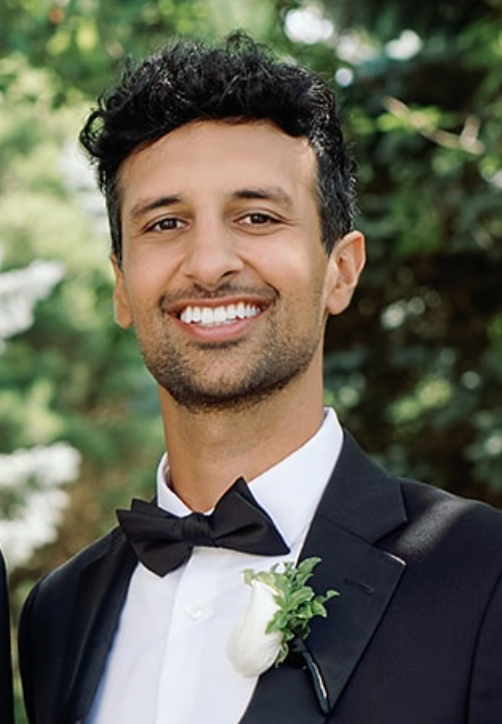
Kanvar Gulati
Kanvar Gulati is a lifelong reality TV superfan who approaches shows like Survivor, Big Brother, and The Challenge the same way others approach sports analytics. With a background in strategy, risk, and data analysis, he’s obsessed with breaking down alliances, decision-making, and game theory to explain why certain players win, and why others flame out spectacularly. Kanvar believes the best reality TV moments aren’t random; they’re the result of incentives, information gaps, and social leverage colliding in real time. When he’s not overanalyzing confessionals or immunity wins, he’s probably comparing a blindside to a blown fourth-quarter lead. His writing blends sharp strategy takes with genuine love for the chaos that makes reality TV addictive. Above all, he treats every season like a game that can, and should, be studied.
Related Articles

Just an Alabama Creek Rat
Plus: Lana Del Rey’s ex joins The Bachelorette, an Amazing Race lawsuit, Heidi Montag on The Masked Singer, & more.

The Book of More Men
Plus: Drugs at The Traitors premiere party, a Laguna Beach reunion, a Real Housewives tragedy, & more.

Cabo Was at Capacity 🙃
Plus: A dramatic Traitors reunion, DWTS cast rumors, a Love is Blind baby, and more.